
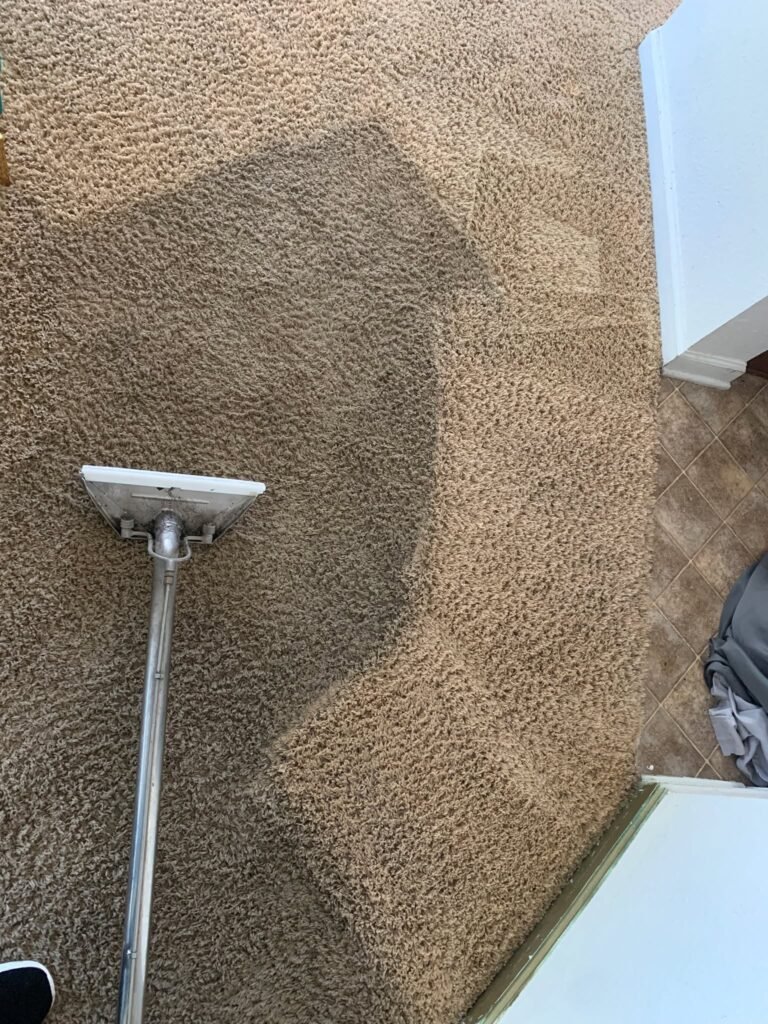
New Orleans weather affects carpet in ways that most other American cities simply don’t experience. The combination of year-round high humidity, extreme summer heat, frequent heavy rainfall, hurricane and storm season flooding risk, and the city’s below-sea-level geography creates a uniquely damaging environment for residential carpet. Humidity causes dust mites, mold spores, and bacteria to thrive deep in carpet fibers year-round. Heavy rainfall events cause moisture to enter homes through doors, tracked-in water, and in severe cases, flooding — all of which accelerate carpet degradation if not properly addressed. Heat intensifies odors already embedded in carpet fibers, making them more noticeable during summer months. For New Orleans and Harvey homeowners, the practical response is a combination of more frequent professional steam carpet cleaning than in drier climates, proper moisture management between cleans, and prompt professional attention after any water intrusion event.
That’s the direct answer. Below, we’ll walk through each of these weather factors in detail, explain exactly how they damage carpet over time, and give you practical steps to protect your home’s carpet through every season.
New Orleans Is Genuinely Different: Why Standard Carpet Advice Doesn’t Apply Here
Most carpet care guidance — manufacturer recommendations, general cleaning schedules, DIY maintenance tips — is written for average American climate conditions. New Orleans is not average. It sits below sea level, surrounded by water, at the mouth of the Mississippi River, in one of the most climatically extreme cities in North America.
The practical consequence for carpet is that the standard “professional cleaning every 12 to 18 months” recommendation that works perfectly well in Dallas or Atlanta is simply insufficient for a New Orleans or Harvey home. The specific combination of factors at work here creates carpet degradation conditions that require a more proactive and locally informed approach.
Understanding exactly what each weather factor does to your carpet is the starting point.
High Humidity: The Year-Round Threat Inside Your Carpet
New Orleans averages relative humidity above 70 percent for most of the year, with summer months regularly exceeding 90 percent. That humidity doesn’t just affect how you feel outdoors — it actively penetrates indoor environments, including the carpet pile and pad where temperatures and airflow conditions are even less favorable for moisture evaporation.
Dust Mites and Allergen Proliferation
Dust mites are microscopic organisms that live in carpet, bedding, and upholstered furniture — feeding on dead skin cells and reproducing rapidly in warm, humid conditions. New Orleans provides ideal dust mite habitat year-round, while most American cities have at least a seasonal reduction in mite populations during drier winter months.
A carpet in a New Orleans home can harbor significantly higher dust mite populations than the same carpet in a drier climate, and those mites produce allergens continuously — contributing to respiratory symptoms, skin reactions, and sleep disturbance for sensitive household members. Professional steam carpet cleaning at temperatures above 130°F kills dust mites and removes their allergen-producing waste from deep in the fiber structure in a way that vacuuming and surface cleaning can’t replicate.
Mold and Mildew Development
High indoor humidity creates conditions where mold spores — present in virtually every indoor environment — can establish themselves in carpet fiber and particularly in the carpet pad beneath. Once mold establishes in a carpet pad, it produces a persistent musty odor that no amount of surface cleaning removes, and it becomes a continuous source of airborne mold spores in the indoor environment.
In New Orleans homes, carpet that wasn’t properly dried after a spill, a tracked-in wet event, or a previous cleaning is particularly vulnerable. The pad retains moisture longer than the surface visible carpet, and in New Orleans’s ambient humidity, that retained moisture rarely fully evaporates without active intervention.
Bacteria and Odor Intensification
Summer heat combined with high humidity creates conditions where bacteria embedded in carpet fibers multiply and produce odors at an accelerated rate. The pet odors, food spills, and general biological material that accumulates in any residential carpet smells noticeably worse in August in New Orleans than the same carpet would in October — not because the carpet is dirtier, but because the heat and humidity amplify the bacterial activity producing the odor.
This is one of the most common seasonal complaints from New Orleans homeowners: carpet that seemed acceptable in winter becomes noticeably odorous in summer. The solution isn’t masking sprays or temporary deodorizers — it’s removing the biological material causing the odor through professional steam carpet cleaning.
Heavy Rainfall and Moisture Intrusion
New Orleans receives approximately 64 inches of annual rainfall — roughly double the national average — and that rainfall often arrives in intense bursts rather than gentle, steady precipitation. The practical consequences for carpet extend well beyond the obvious.
Tracked-In Water and Moisture
Every entry into the home during and after heavy rainfall introduces water onto carpet near doorways, hallways, and transition areas. In a city where rain events are frequent and intense, this is a daily occurrence for significant portions of the year. That repeated moisture introduction at entry points creates chronically damp zones in residential carpet that are particularly susceptible to mold, bacteria growth, and accelerated fiber wear.
Regular attention to entryway carpet — more frequent spot cleaning, faster drying with fans after wet-weather events, and inclusion of these high-moisture zones in professional cleaning schedules — is a practical adaptation for New Orleans homeowners.
Storm Season and Water Intrusion Risk
New Orleans’s hurricane and tropical storm season runs from June through November. While significant flooding events are not annual occurrences for every neighborhood, the risk of water intrusion during severe weather is a real and ongoing concern for Harvey and the greater New Orleans area.
Carpet that has been exposed to storm water intrusion — even relatively minor amounts from door seals or window condensation during a storm — needs prompt professional attention rather than simply being dried and left. Storm water carries contaminants from outdoor environments, and carpet that dries without professional treatment retains those contaminants in the fiber structure.
For carpet that has experienced significant water exposure from any source, professional steam carpet cleaning after thorough drying — not before — is the appropriate response. Cleaning before the carpet is fully dry risks trapping additional moisture.
Heat and Its Effect on Carpet Fibers and Odors
New Orleans summers bring sustained high temperatures that affect carpet in ways that go beyond the humidity effect.
Extreme heat causes carpet fibers — particularly synthetic fibers like nylon and polyester — to become temporarily more elastic and impressionable. Heavy furniture sitting on carpet during peak summer heat can create deeper, more lasting impressions than the same furniture would during cooler months. This isn’t a cleaning issue per se, but it’s worth using furniture coasters under heavy pieces during summer to distribute weight and reduce impression depth.
More significantly, heat intensifies the odor production of biological material embedded in carpet. The pet dander, food residue, skin cells, and general organic matter that accumulates in carpet fibers doesn’t change in quantity with temperature — but the rate of bacterial activity producing odors from that material increases with heat. This is why New Orleans homes often notice carpet odors most acutely in summer, and why steam carpet cleaning before the peak summer season is particularly effective at reducing the odor burden through the hottest months.
What New Orleans Homeowners Can Do: A Practical Response
Understanding how weather affects carpet leads directly to a practical maintenance approach suited to New Orleans’s specific conditions.
Increase professional carpet steam cleaning frequency. While the national recommendation is every 12 to 18 months, most New Orleans and Harvey homes benefit from professional steam carpet cleaning every 6 to 12 months — and households with pets, allergy sufferers, or young children may benefit from quarterly professional cleaning. The year-round allergen and biological pressure simply doesn’t allow the longer intervals that work in drier climates.
Manage indoor humidity actively. Running air conditioning consistently during humid months is the most effective humidity management tool available. Dehumidifiers in areas of the home that feel persistently damp — particularly basements or rooms above a crawlspace — add an additional layer of protection for carpet in those zones.
Address moisture intrusion events promptly. Any time water enters the home in quantities beyond normal tracked-in moisture — from a storm, an appliance leak, or a plumbing issue — the affected carpet area should be dried as quickly as possible with fans and dehumidifiers, and professional cleaning should follow once the carpet is fully dry.
Schedule pre-summer professional cleaning. A professional steam carpet cleaning in May — before peak humidity and heat arrive — removes the accumulated biological material and allergens that would otherwise intensify through summer, and sets the carpet up to handle the most demanding months in the best possible condition.
Include rugs and upholstery in your cleaning schedule. Area rugs and upholstered furniture accumulate the same weather-driven allergens, dust mites, and biological material as wall-to-wall carpet. Rug cleaning and upholstery cleaning on a similar schedule to carpet cleaning keeps the full indoor textile environment in good condition.
About Quality Guaranteed Steam Cleaning LLC
Quality Guaranteed Steam Cleaning LLC provides professional steam carpet cleaning, rug cleaning, and upholstery cleaning for homes throughout Harvey, LA and the greater New Orleans area — with the local knowledge to understand exactly what Louisiana’s climate does to residential carpet and how to address it effectively.
New Orleans weather creates carpet care challenges that generic cleaning advice doesn’t account for. Quality Guaranteed Steam Cleaning LLC builds its service around those specific local conditions — using professional truck-mounted hot water extraction that reaches deep-embedded allergens, dust mites, and bacteria; extraction power that minimizes post-clean drying time in Louisiana’s humidity; and a scheduling approach that aligns with New Orleans’s seasonal demands rather than a one-size-fits-all calendar.
Whether it’s a pre-summer deep steam carpet cleaning to prepare for the hottest months, a post-storm professional clean to address water intrusion, rug cleaning, or upholstery cleaning combined in a single visit, Quality Guaranteed Steam Cleaning LLC delivers results matched to what Harvey and New Orleans homes actually need.
If you’re in Harvey, LA or the greater New Orleans area and want professional carpet cleaning
that accounts for what this city’s weather actually does to your carpet, Quality Guaranteed Steam Cleaning LLC is the local expert to call. A quick message or phone call gets you a clear, no-obligation quote.
Frequently Asked Questions
How does New Orleans humidity affect carpet inside the home?
High humidity creates ideal conditions for dust mites, mold spores, and bacteria to thrive in carpet fibers and pad year-round. This produces higher allergen levels, persistent odors, and increased mold risk compared to homes in drier climates — particularly in carpet that hasn’t been recently professionally cleaned.
How often should New Orleans homeowners have their carpet professionally cleaned?
Most New Orleans and Harvey homes benefit from professional steam carpet cleaning every 6 to 12 months rather than the national recommendation of 12 to 18 months. The year-round humidity, frequent rainfall, and seasonal heat create conditions that require more frequent deep cleaning than drier climates allow.
What should I do if storm water gets into my carpet?
Dry the carpet as quickly as possible using fans and dehumidifiers. Once the carpet is fully dry, schedule professional steam carpet cleaning to remove the contaminants storm water introduces into carpet fiber. Don’t clean before the carpet is fully dry, as this can trap additional moisture.
Why does my carpet smell worse in summer in New Orleans?
Summer heat accelerates the bacterial activity of organic material embedded in carpet fibers, intensifying odor production from pet dander, food residue, and general biological accumulation. Professional steam carpet cleaning before summer removes this material, significantly reducing the odor burden through the hottest months.
Does Quality Guaranteed Steam Cleaning LLC offer rug cleaning and upholstery cleaning in Harvey? Yes. Quality Guaranteed Steam Cleaning LLC provides rug cleaning and upholstery cleaning alongside steam carpet cleaning for Harvey and New Orleans area homes, available combined in a single visit for convenience and value.
Final Thoughts
New Orleans weather is unlike almost anywhere else in America — and it affects your carpet in ways that standard maintenance advice simply doesn’t account for. Understanding the specific impact of humidity, heavy rainfall, storm season, and summer heat on your home’s carpet is the first step toward protecting it effectively.
For Harvey and New Orleans homeowners who want professional carpet care matched to what Louisiana’s climate actually demands, Quality Guaranteed Steam Cleaning LLC is the local team with the knowledge and equipment to get it done right — every season of the year.
Contact Us for Your Carpet cleaning service in Harvey, LA
Company Name: Quality Guaranteed Steam Cleaning LLC
Address: 3712 Lake Winnipeg Dr, Harvey, LA 70058, United States
Phone: +1 504 406 9962
Website: Click Here
Google Business Profile